
-
 My Stable
 -
 Showing
 -
 Advanced Facilities
 -
 Community
 -
 Upgrade
 -
 Resources
X
No store required
Add to your home screen
Get a sleek, app-like experience without visiting your browser every time.
Instant access
Launch straight from your home screen — no browser needed
Full screen gameplay
Runs minimal browser chrome, giving you more screen space
Add to your home screen
How to set it up in Safari:
1
Tap the Share button at the bottom of your screen
2
Scroll down and tap Add to Home Screen
3
Tap Add in the top-right corner
Add to your desktop
Install the game as an app for quicker access and a cleaner experience.
Instant access
Launch from your taskbar or desktop — no browser tab hunting
Its own window
Runs in a dedicated window with minimal browser chrome cluttering the UI
HGG Community Forums
Log In to HorseGeneticsGame
HGG Community Forums
Join our discord server!
Howdy, Stranger!
It looks like you're new here. If you want to get involved, click one of these buttons!
Categories
- All Discussions93,069
- Announcements1,227
- HJ2 Discussion90,054
- ↳ New Member Introductions70
- ↳ Help me out5,800
- ↳ Horses For Sale and Auction21,228
- ↳ Breeding Ads and Sales6,436
- ↳ Herd Helper42,329
- ↳ Bug Discussion38
- ↳ Repair Log12
- ↳ New User Experience87
- General Discussion1,788
- ↳ Saddle Sisterhood287
- ↳ Games, Contests and GiveAWays353
- ↳ Genetics409
In this Discussion
- Alohomora May 2019
- GeneverGinger May 2019
- HunterUnderSaddleGirl May 2019
- Lallyhop May 2019
- Looper May 2019
The Mares With Attitude That Make You Question Your Luck
-
I spayed this mare as a foal because she's uneven and tested inconsistent and is low on the PT I want to see for her Generation. She's 3 and hasn't lost a match yet. :facepalm: Anyone ever decide to unspay a Bootstrap mare after seeing how she goes?
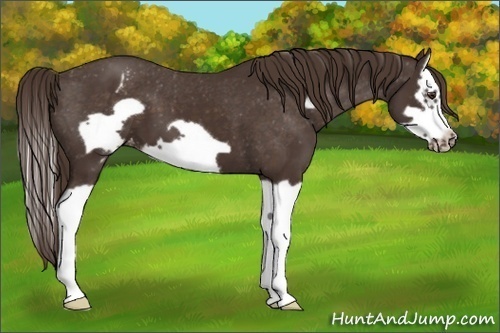
Show Me Now 65
Who's surprised you? :) -
I very rarely unalter my mares. Breeding advice (or my own hand) spayed them for good reason! When I do unalter, it’s because they are very important to my breeding program, and they bring a vital, irreplaceable improvement. It has to be a mare that I cannot replace or find for sale elsewhere. Spending 250k on a GMT to unsnip means 250k less for more barns, other GMT work, buying horses, etc.
This is how I would analyze her. * My method is not better or worse than your approach, it is just what works well for me. Please don’t take it as “this is the only way to determine a horse’s worth as an intact breeder.” *
The way I would approach this mare: she has placed first in two shows that actually start to give a measure of her talent. Good start, definitely, but let’s reanalyze in 6-10 months from now. A lot can happen as the classes grow. Even my very best, repeatedly-earned-year-end-Breeder’s-Club-ribbons show horses do not always place first.
All her 1L classes with only two entries (her foal classes) are literally coin-flip levels of luck, and 2L is not much more skill-based with only three entries. I call winning at the low levels like that: “medium fish in a little pond.” It looks pretty to see all those firsts, but winning at the low levels may not be an accurate indicator of exceptional talent later on.
If she DOES continue to place first in every class, why not give her the best opportunity possible to shine in the show arena? (Aka, keep her spayed.) If she starts to falter in big classes, then she will need all the altered bonus help she can get (aka, keep her spayed).
And then I have the SO PRETTY! factor to consider. Yes, this mare is gorgeous. But is she irreplacably unique? No. I found this Blue-papered bootstrap mare of similar genetics (liver with splash) on the public forum for 3500. (Aka, keep her spayed.) That is one example of several liver mares currently available for public sale. The auction will have several more. You could buy SEVERAL nice breeding stock livers for that 250k needed to unalter her. (Aka, keep her spayed.)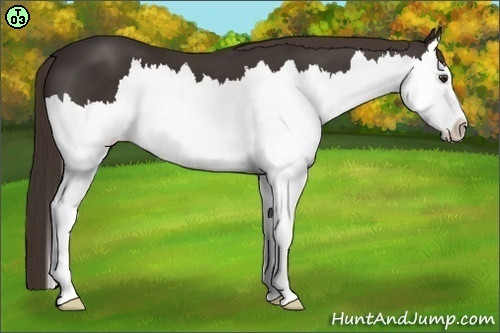
Lvr spl prl x kp 43g sba
End result: This mare didn’t give me one good reason to unsnip her. Each potential reason to unspay her was answered with an alternative solution.
IMO, you made an excellent call by deciding: “this mare’s statistics are not good enough to stay in my show herd. She will shine in my show herd, and I can breed a horse that looks this again, but with even better numbers.” I would stand by your original decision, and save your GMT for something even more special : )
Looking for Appaloosas? Check out my Riata account.
You matter to me!
You are valued, you are important, and you are loved! ❤️ -
Thank you Alohomora! :) Will just enjoy her as she is and hope to get a better Gen2 liver daughter from her dame next time. :)
-
Also, keep in mind that how well a horse will place in a class has very (very) little to do with their breeding ability.
Let's say that a parent has X amount of "quality points" that they give to their foals. Let's say 100% breeding ability, and they give right in the middle of their range of total quality. However 60% of the "quality" goes towards the breeding quality of a foal, and 40% goes to the showing ability. So the horse has somewhat poor showing ability, but somewhat good breeding ability. However, you can still look at a parent's breeding ability by their AFPT, even if an individual foals PT is poor.
I'm sorry that's a really horrible example, I'm probably just made it more confusing sorry.
But another way to look at it, as I know a Star parent who produces a 13PT foal that won every single class, but had failed paper. So PT just simply doesn't cover the whole picture, and how well they place in classes at the beginning of their year doesn't really make a difference at all.
I had another point I was going to make, but forgot what it was. Sorry.Breeder of any and all crazy colored drafts and RH horses.
15552 -
I agree with what folks have said above! The only other thing I'll add is that I've noticed lower PT horses seem to win more often at younger ages/levels, and higher PT horses can often seem to lag in their show results until they train for a while. Early wins are great, but they aren't really an indicator of long-term show success.
-
Yeah, breeding ability and PT are semi-related at higher gens, but not as much as you might think!
So to start, breeding ability (what determines paper level as well as how "quality" they are) is expressed in percentages. A perfect foundation (such as a C/yellow papered rank special or even just the perfect foundation herd helper) will have 100% breeding ability. An exceptionally perfect/exceptional producer (B/red papered foundation) has 105% breeding ability.
With boosting (1% or 5% boost), we can determine where a couple more numbers are:
- by boosting a perfect foundation 1%, we can change their papering from C/yellow to B/red. Thus the division from C/yellow to B/red is the 100% to the 101% mark.
- by boosting an exceptional producer 5%, we can change their papering from B/red to A/blue. Thus the division from B/red to A/blue is 109% to 110%.
So 101% to 109% is B/red, 100% to somewhere below that is C/yellow, 110% to somewhere (possibly 119% based on the range of B/red) is A/blue, and above that is star/gold.
While we know for certain that papering is an indication of breeding ability (the higher that percentage is, the better), we also know that AFPT is an indicator - but PT itself isn't.
So what does that mean?
AFPT stands for Average Foal Performance Test, or Average Foal PT for short. In other words, out of all the foals that horse has had, it's the average of all the PT tests of those foals.
Since we're told that AFPT is a fair measure to cull horses by (as long as the breeding conditions are as equal as possible and you have at least a few foals on the ground), we know that AFPT is, in fact, a measure of breeding ability. The higher the AFPT, the better producer (the higher percentage) a horse is.
However, we have also been told that PT itself is not an indicator of the breeding ability of a horse. That means the PT score is not in any way tied to the breeding ability of the horse - it's tied to the breeding ability of the parent.
Given that, we can therefore say that when two horses are paired, their breeding abilities are used to calculate the breeding ability of the foal - and their breeding abilities (possibly combined with their PTs, no telling) are used to calculate the PT of the foal.
Both are randomized within a range - so maybe horse X and Y can give their foal a breeding ability somewhere between 106 and 115%, and a PT score of somewhere between 10.3 and 11.5.
The key here - both numbers are randomized. So the foal might have a 106% and an 11.5 PT (barely better than an ExPerf but with a nice PT) or it might be a 115% with a 10.3 (an assumed mid A but with a PT score worse than some ExShows). It might also be somewhere in the middle, so perhaps a 109% with a 11 PT, or any other combination thereof.
Hence, PT does not correlate to breeding ability of the horse, even though it correlates to the breeding ability of the parents.
Where AFPT becomes useful is in determining smaller differences - a horse that can throw from 10.5 to 11.5 will theoretically (given enough foals and fair comparison, as pasture bonus among other things can change that) have a lower AFPT than one that can throw from 11 to 11.9, even though they can both throw, say, an 11.3, because statistically speaking they with throw an equal number of high end of the range foals as low end of the range foals, which averages out. So even though both are papered B/red, you can determine one is higher within that 101%-109% range than the other, since that percentage number correlates to how high of a PT they can throw.
ID 45703 | he/himOpen barn policy - no closed lines! I'm always selling straws and eggs from anything I have that catches your eye, don't hesitate to PM me and ask!Thanked by 1magesvalley

Join our discord server!
 News & Alerts
8/21/2026 12:56 AM EST
Introducing the Shape Primitives tack pack. This collection contains lots of color changeable basic shapes to help you bring your designs to life. Unlockable now on the "Tack Pack Manager" page.

8/18/2026 1:54 PM EST
The game has been experiencing occasional bursts of DDoS traffic, which have caused short outages over the past couple of months.
We’re working to mitigate the issue, but it’s still a work in progress. There may be additional outages, and you might notice some unusual behavior while we test different solutions. For example, you may encounter more Cloudflare verification pages or temporarily find yourself locked out of the forums.
Thanks for your patience while we work through this.
We’re working to mitigate the issue, but it’s still a work in progress. There may be additional outages, and you might notice some unusual behavior while we test different solutions. For example, you may encounter more Cloudflare verification pages or temporarily find yourself locked out of the forums.
Thanks for your patience while we work through this.
8/16/2026 12:13 AM EST
New Derby Day!
The Pool Party Dress-Up Derby is accepting entries until the end of the week.8/15/2026 11:30 AM EST
SWITCH UP! It's the 15th and Random Gene Sale switch has activated. Until the 1st of the month you can now pick up:
Sooty Plus

Onyx

Appaloosa Spot Regulator 1

Phantom Sun Runes

Phantom Star Runes

PDR Belton Spotting

Merle

Sooty Plus
Onyx
Appaloosa Spot Regulator 1
Phantom Sun Runes
Phantom Star Runes
PDR Belton Spotting
Merle
8/15/2026 1:44 AM EST
All foals left in the pasture at the end of the season will now be moved to your primary barn at end of the month rollover. This is to prevent issues with pastures becoming overfilled.
 Bonus Stall Progress
0%